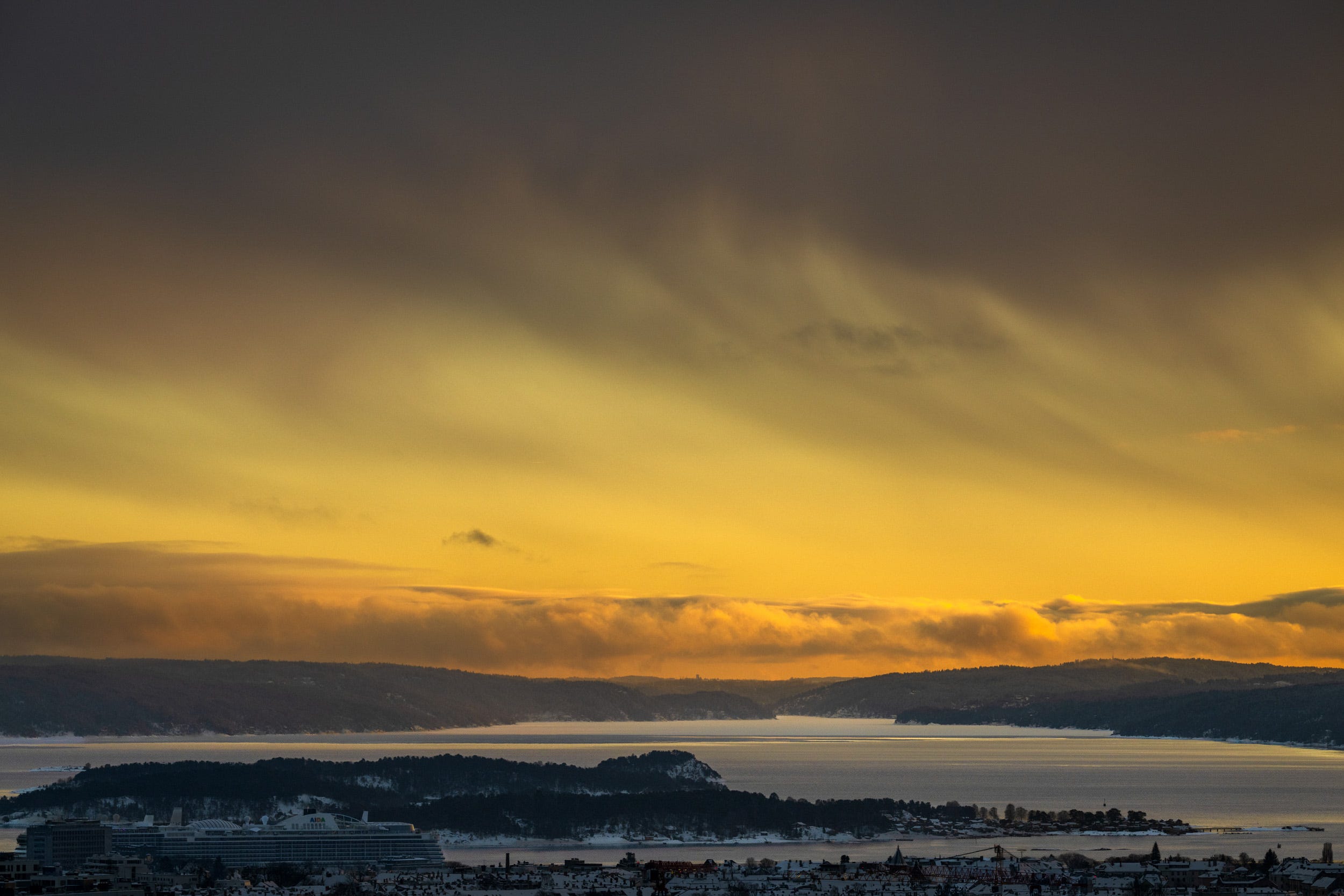
Oslofjorden
As Framed Through a Bedroom Window

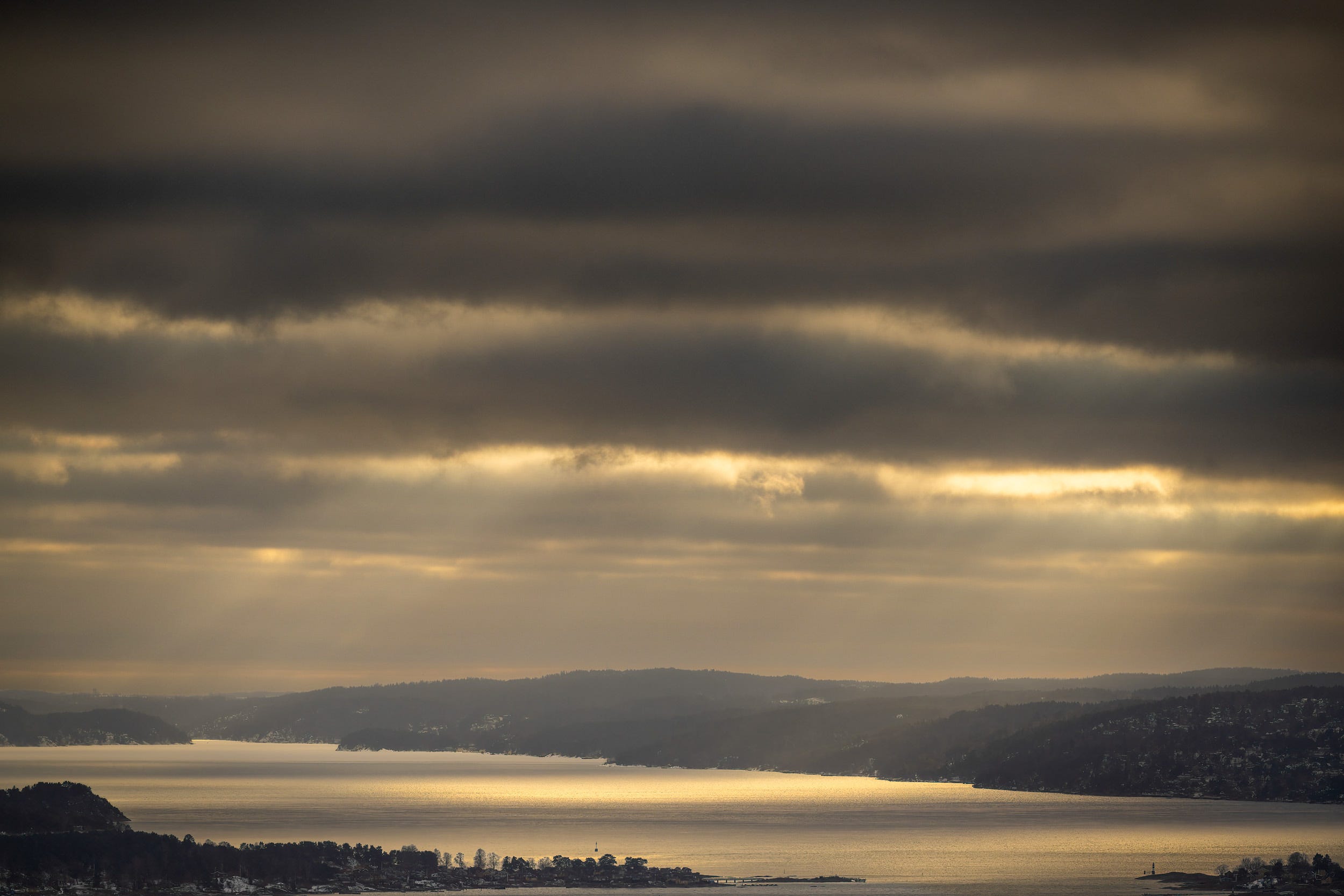
Think about a tourist who sees a pretty view, takes a photo, and moves on. That snapshot preserves the emotion of a specific instant, one that lasted perhaps only 1/250 of a second. While it might be a great "Instagram Moment," it is only a single dimension of what is most likely a complex subject.
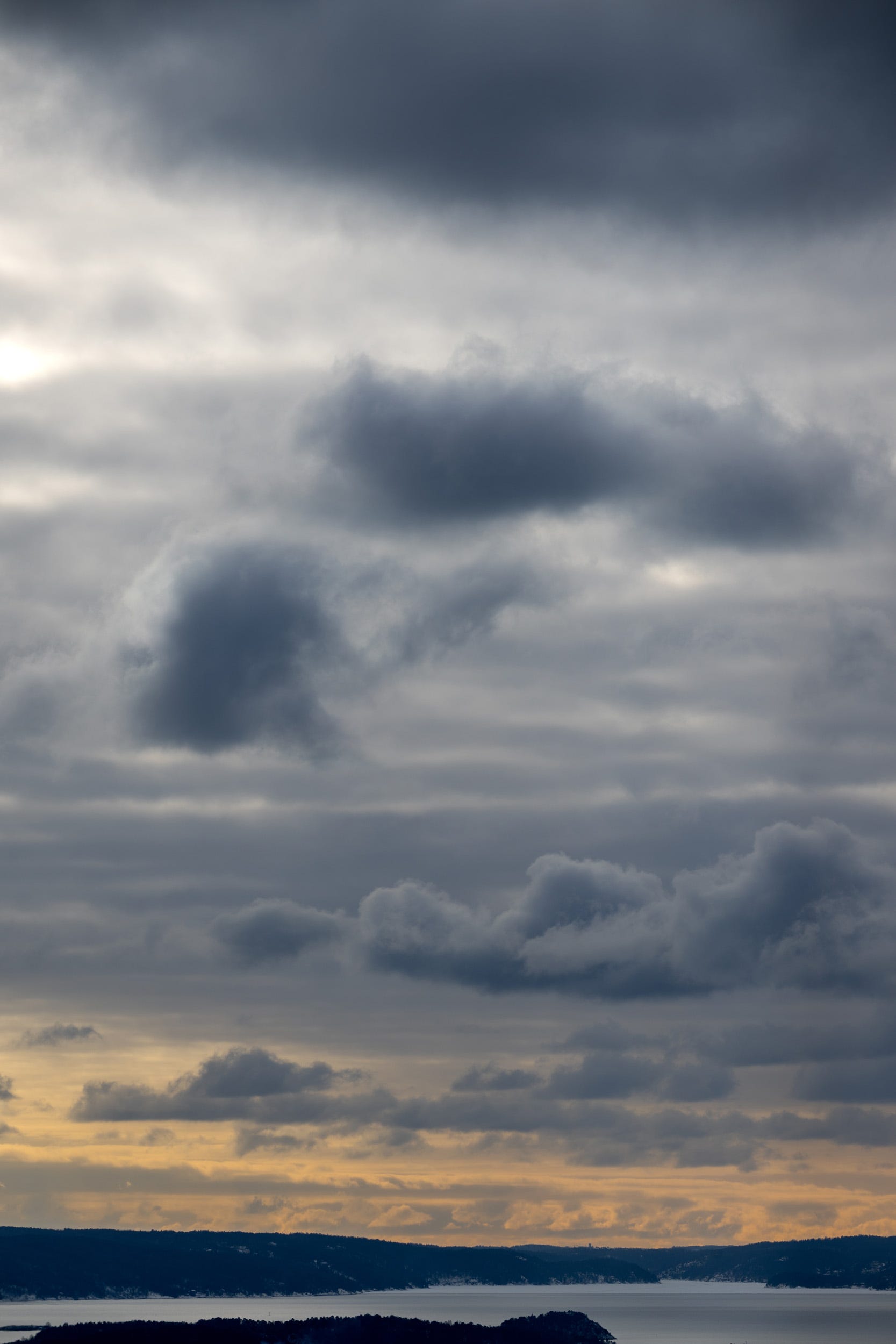
However, taking hundreds of images from the same spot over many years changes everything. When viewed together, these moments reveal a breathing landscape. This is not just 'taking pictures of a view.' It is a study of time and atmosphere, where you must exhaust the obvious. It forces you to find beauty in grey days and flat light—shifts that a casual observer would undoubtedly miss. This is how a photographer becomes an archivist of light.
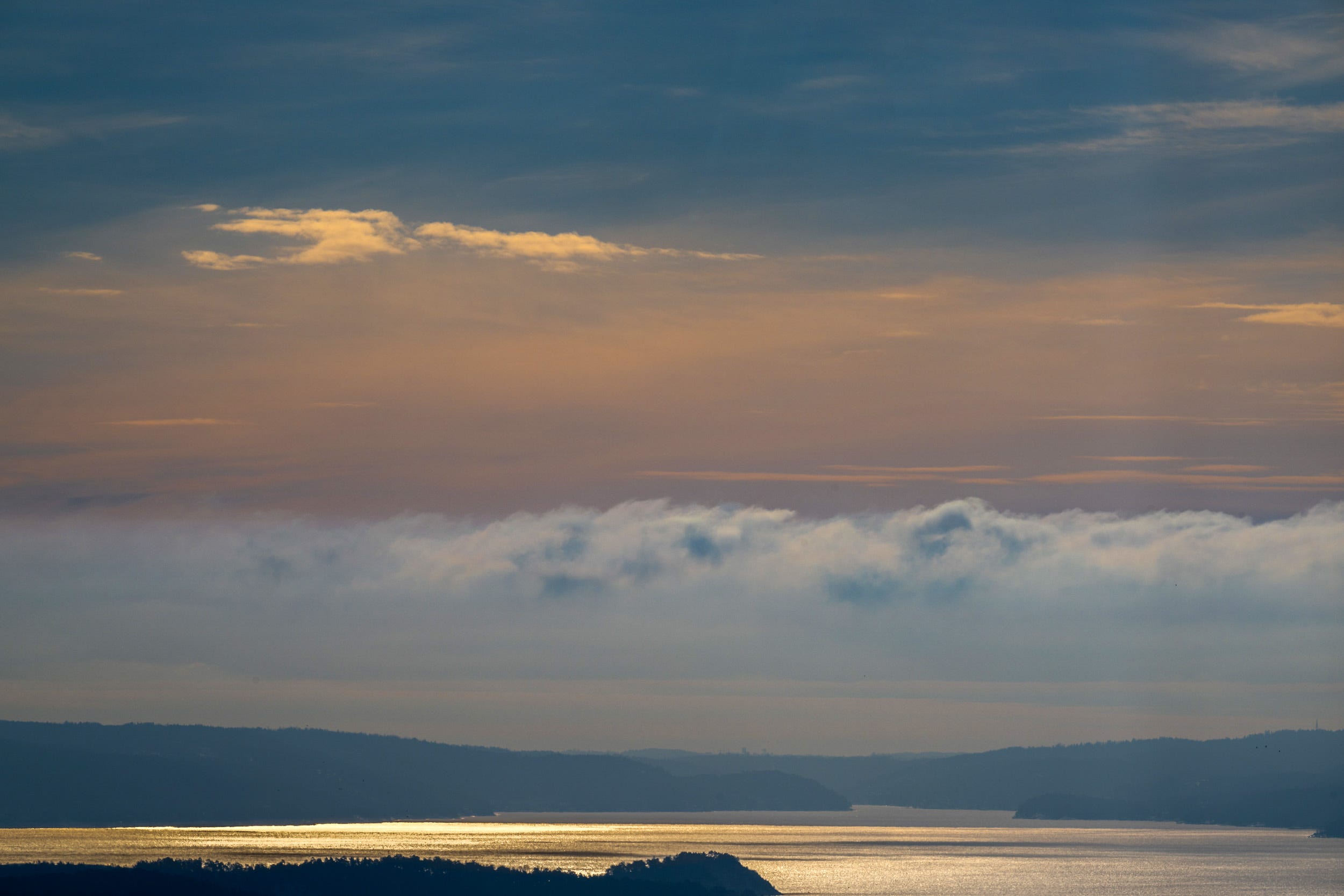
My stage for this study is a bedroom window facing south-southeast, sitting at an elevation of 154 metres. From here, the view covers a wide arc. It stretches from due east to the south-southwest, taking in the Osloøyene and the inner reaches of Bunnefjorden.
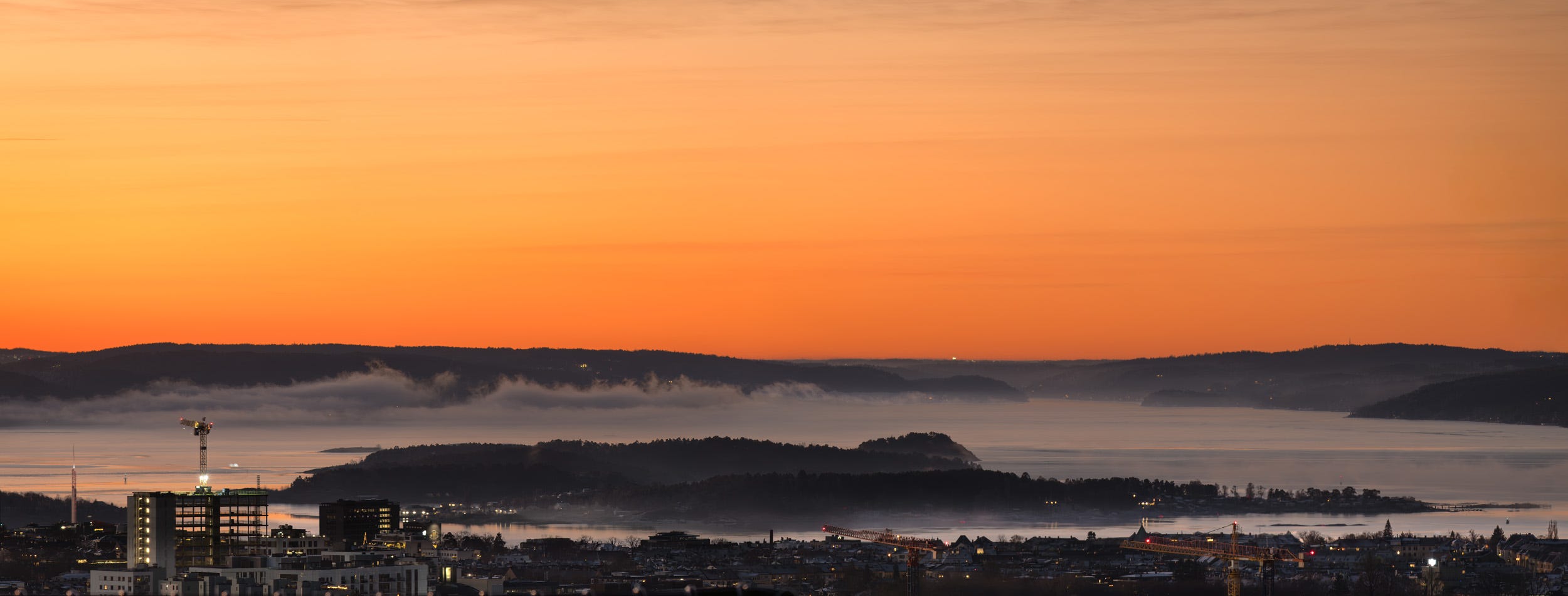
Due to Oslo’s latitude, the sun’s path swings dramatically throughout the year.
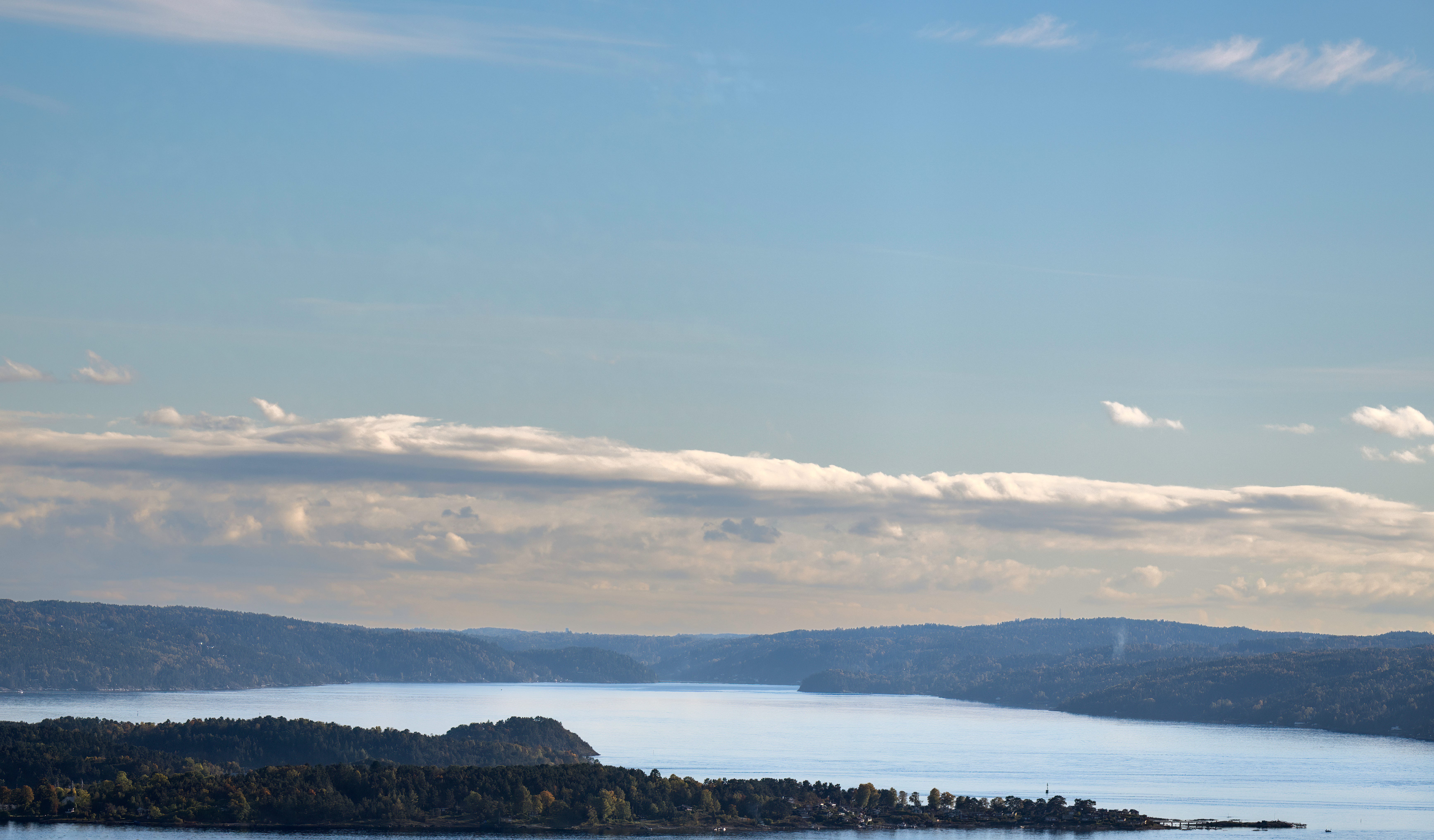
In summer, the sunset is a "wrap-around" event. Because the sun sets far to the northwest, the light does not fade so much as it pivots. The light in June is expansive and generous. It floods the fjord from a high angle, illuminating the green canopy while leaving the water itself a deep, flat blue.
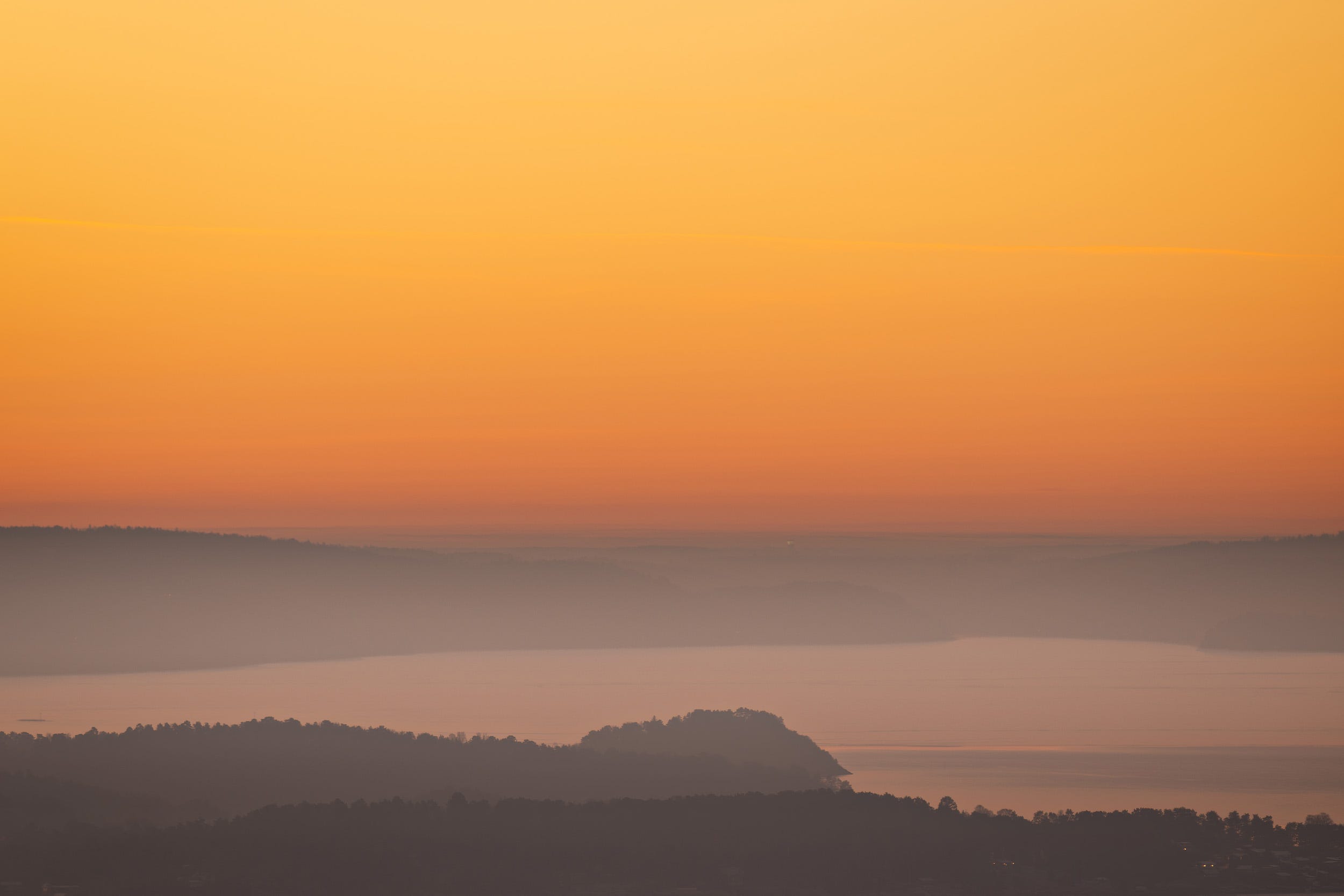
In winter, the geometry tightens, and the sun no longer wraps around the house but stays trapped within the southern view. It creates a short, low arc that hugs the horizon, setting in the southwest directly over the ridge of Nesodden. Instead of illuminating the view, the winter sun silhouettes it, creating a perpetual "golden hour" of intense gradients while it is up. The sky often turns pastel—soft pinks, apricots, and lilacs—reflecting off the icy water. It feels like an endless sunrise, a slow-burning gold that refuses to leave the sky.
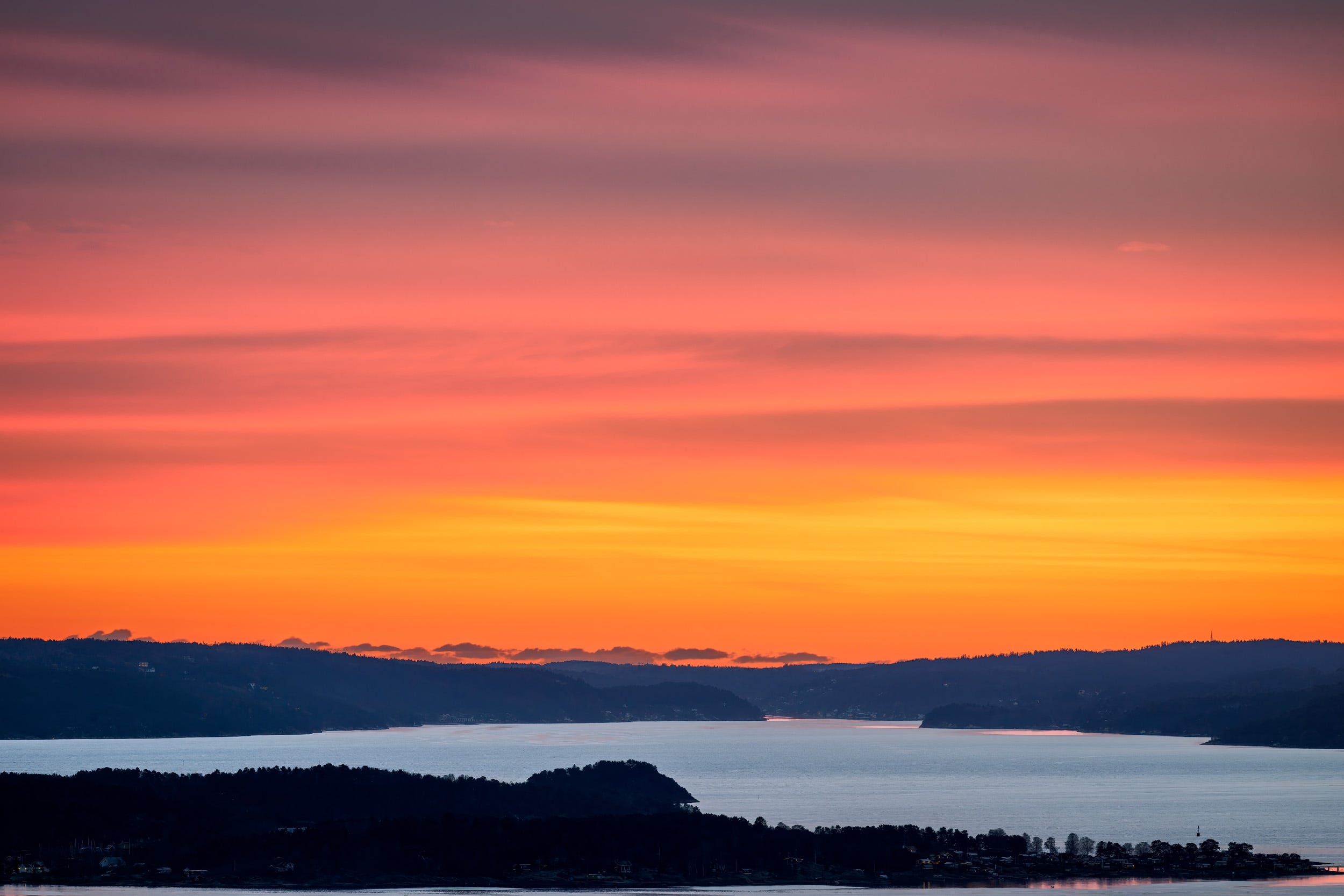
When it finally sets, the sun plunges behind the Nesodden peninsula, instantly casting the fjord into shadow. Above, the sky burns a cold, brief violet. The light doesn’t paint the landscape; it slices through it. Long, raking shadows stretch from the Nesodden shoreline all the way to Svartskog before vanishing into the heavy blue hour.
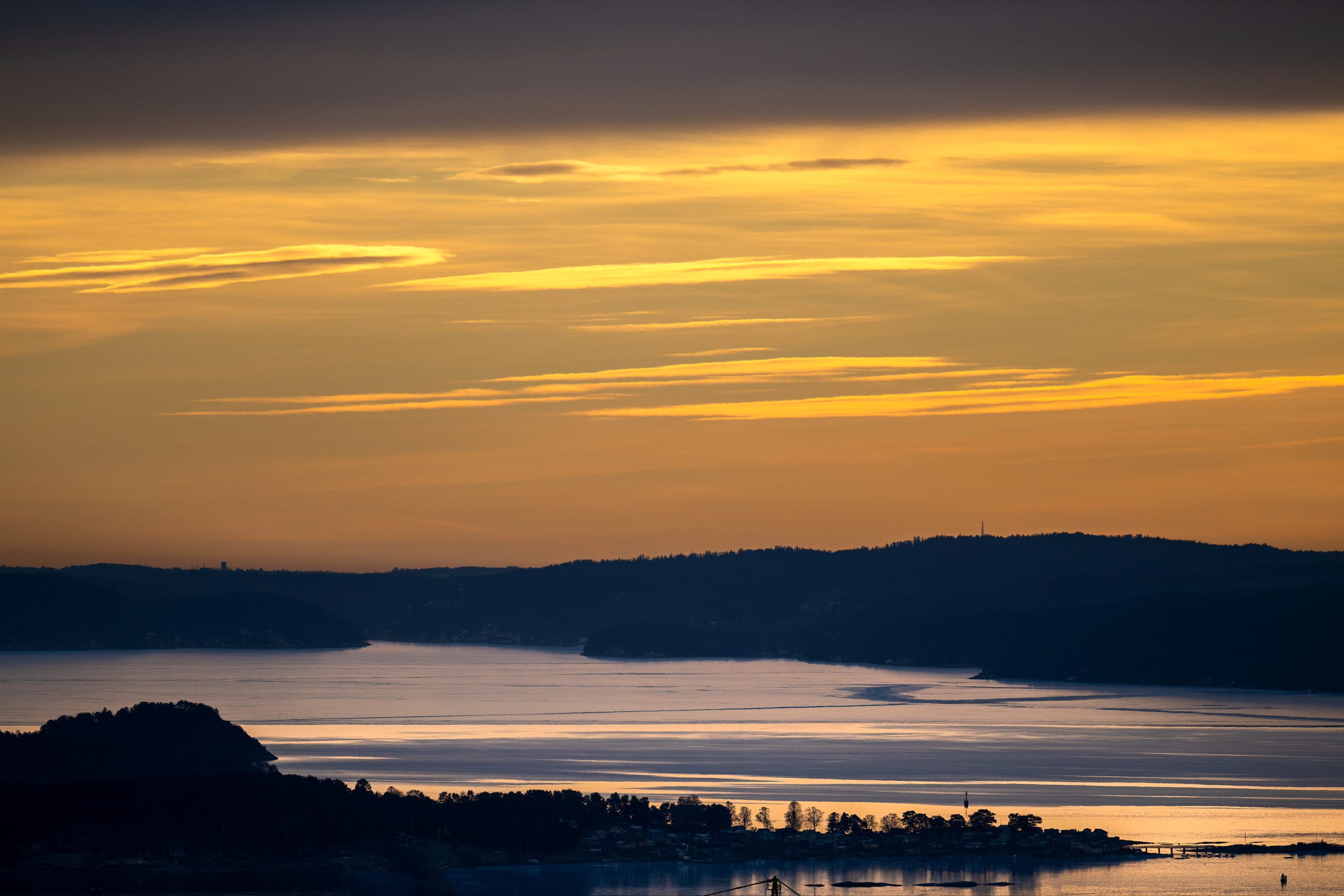
Spring and autumn lie between these extremes, offering a varied mix of light. But one constant, regardless of the season, is the drama of the grey days. When overcast, the fjord becomes a study in monochrome. The sky acts as a giant softbox, diffusing the light evenly, and the water often takes on a metallic sheen of silver and lead. In heavy fog or snow, the distinction between water and sky vanishes entirely, creating a void-like, minimalist canvas.
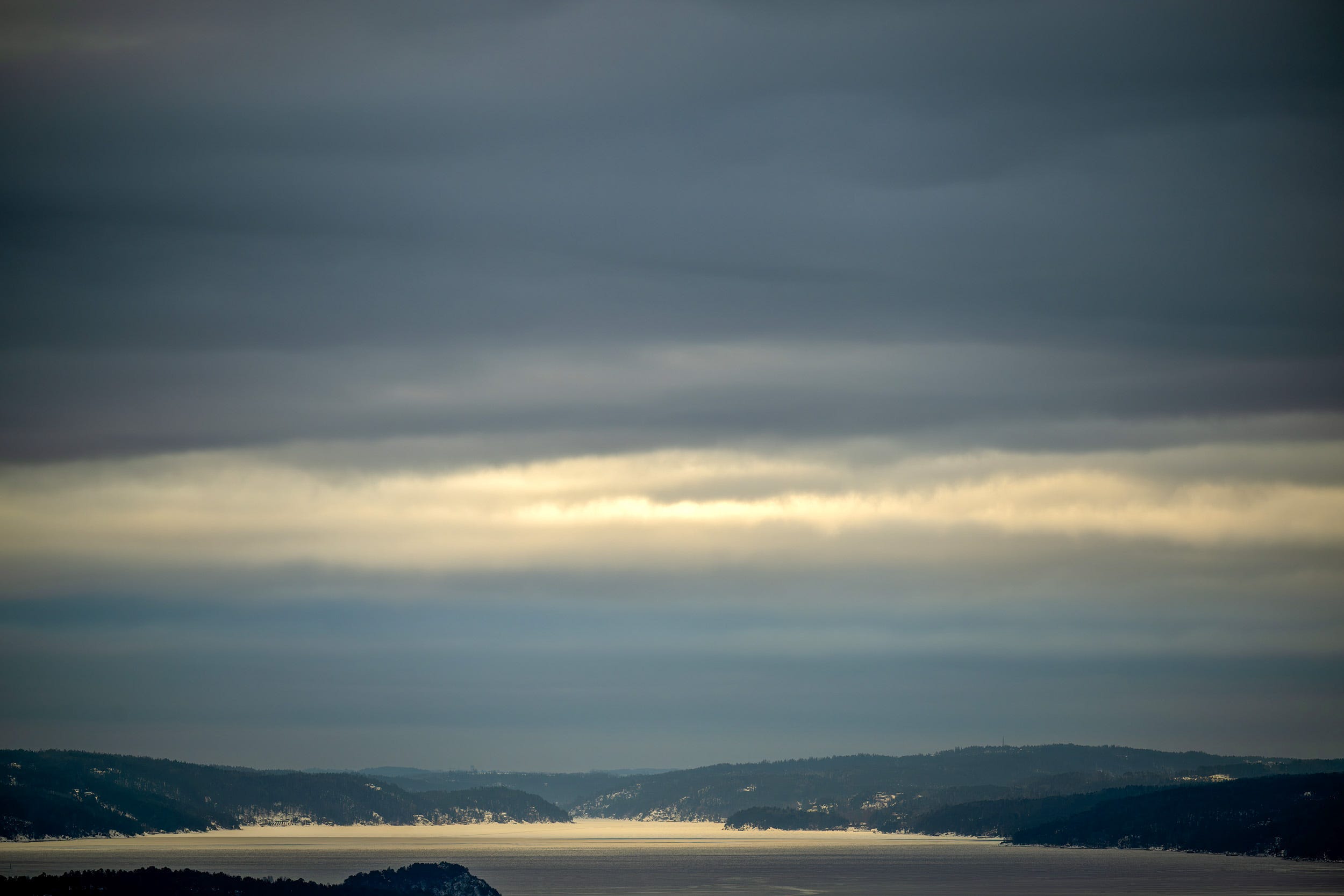
As Nature takes this ever-shifting theatre of light and adds variations in weather, the bedroom window becomes a front-row seat to a dynamic performance.
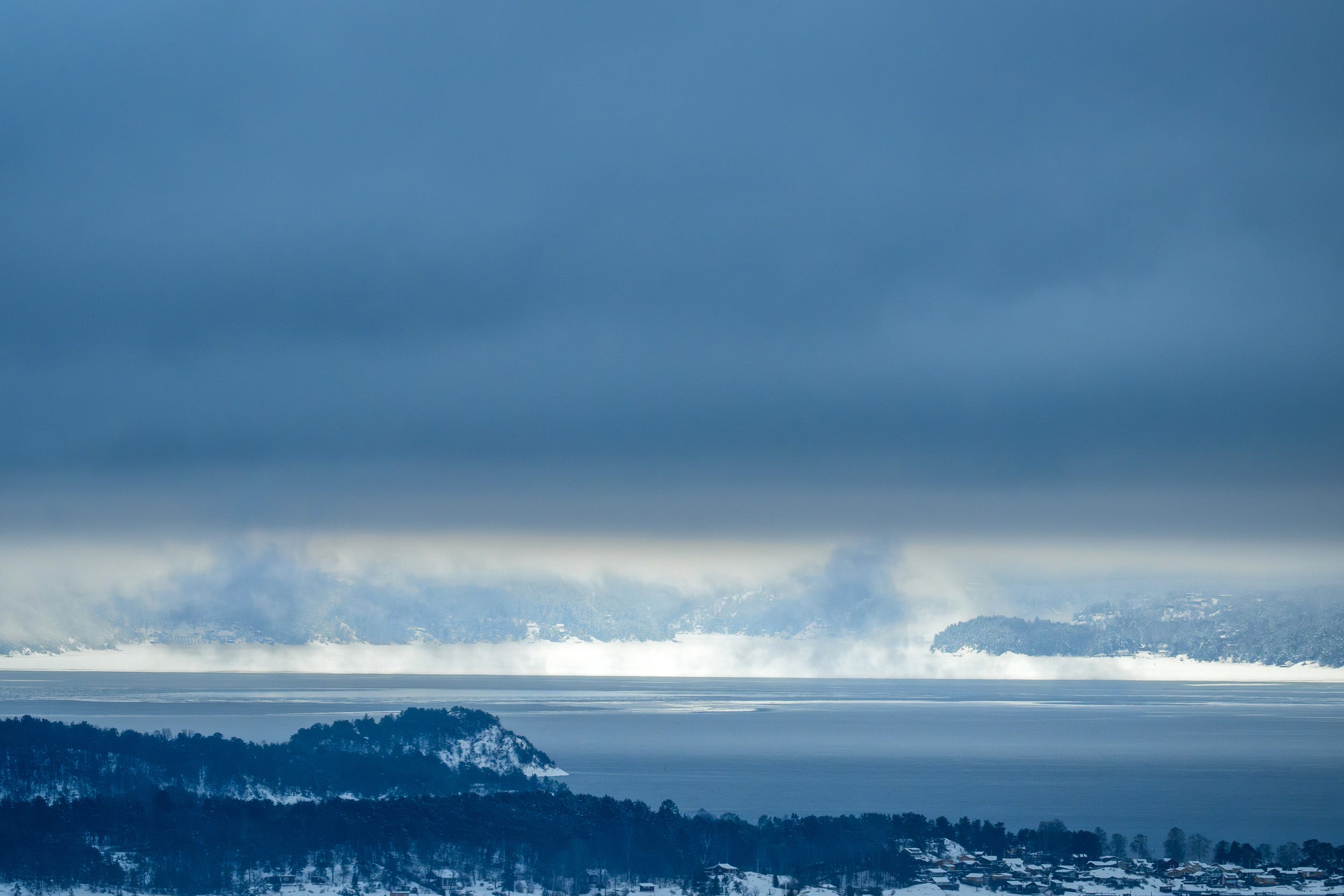
Yet, the physical frame of the window can be restrictive. I found that including the entire view often weakened the emotional impact. Instead, I chose to 'extract' key parts of the scene using a long focal length. By isolating these specific elements, the images remained truer to the feeling of the moment.
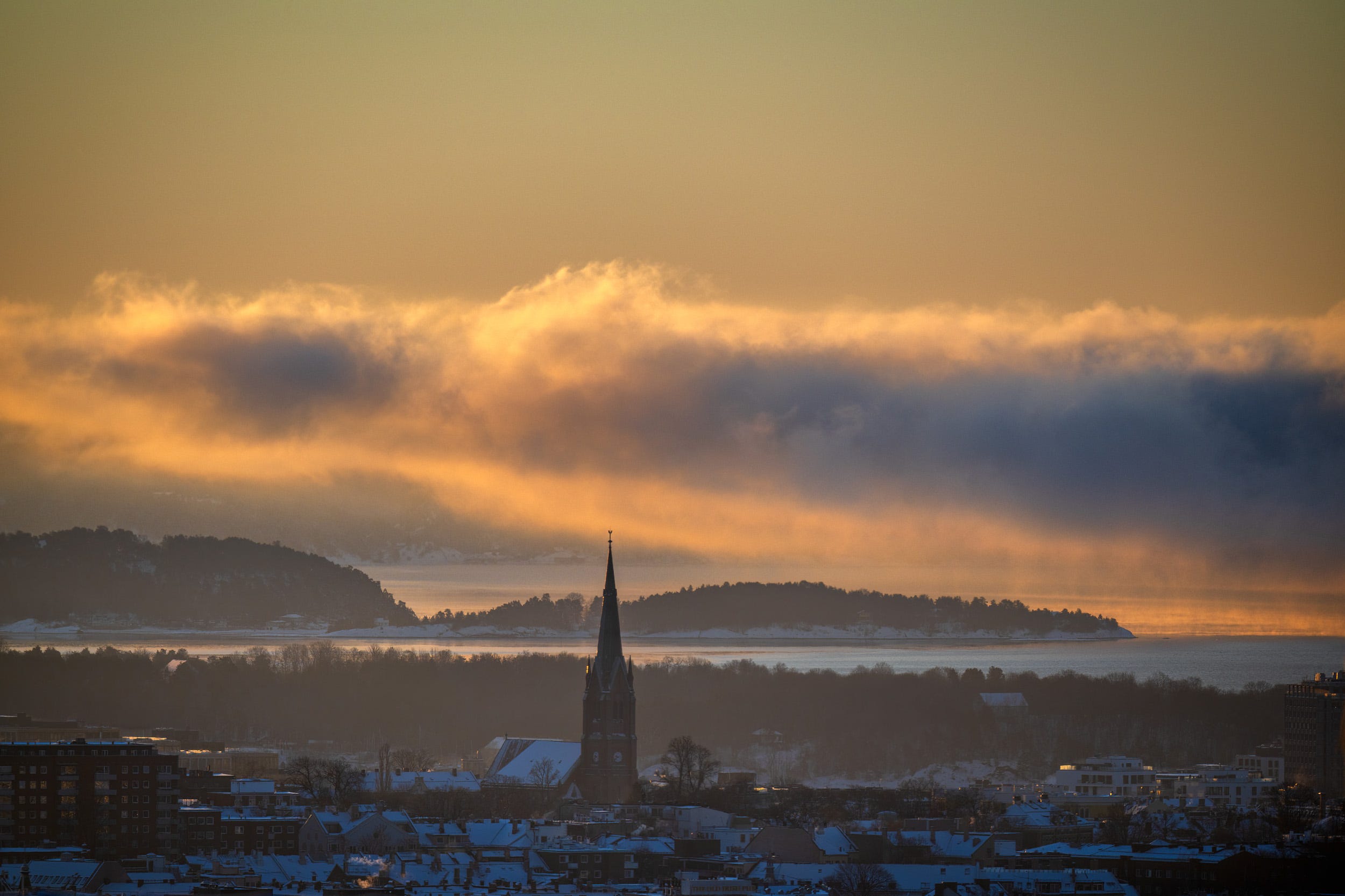
This technique also compresses perspective. Although the end of Bunnefjorden lies 22 kilometres away, the lens pulls it forward, bridging the distance and creating visual intimacy. It builds a cozy bond between the viewer and the landscape.
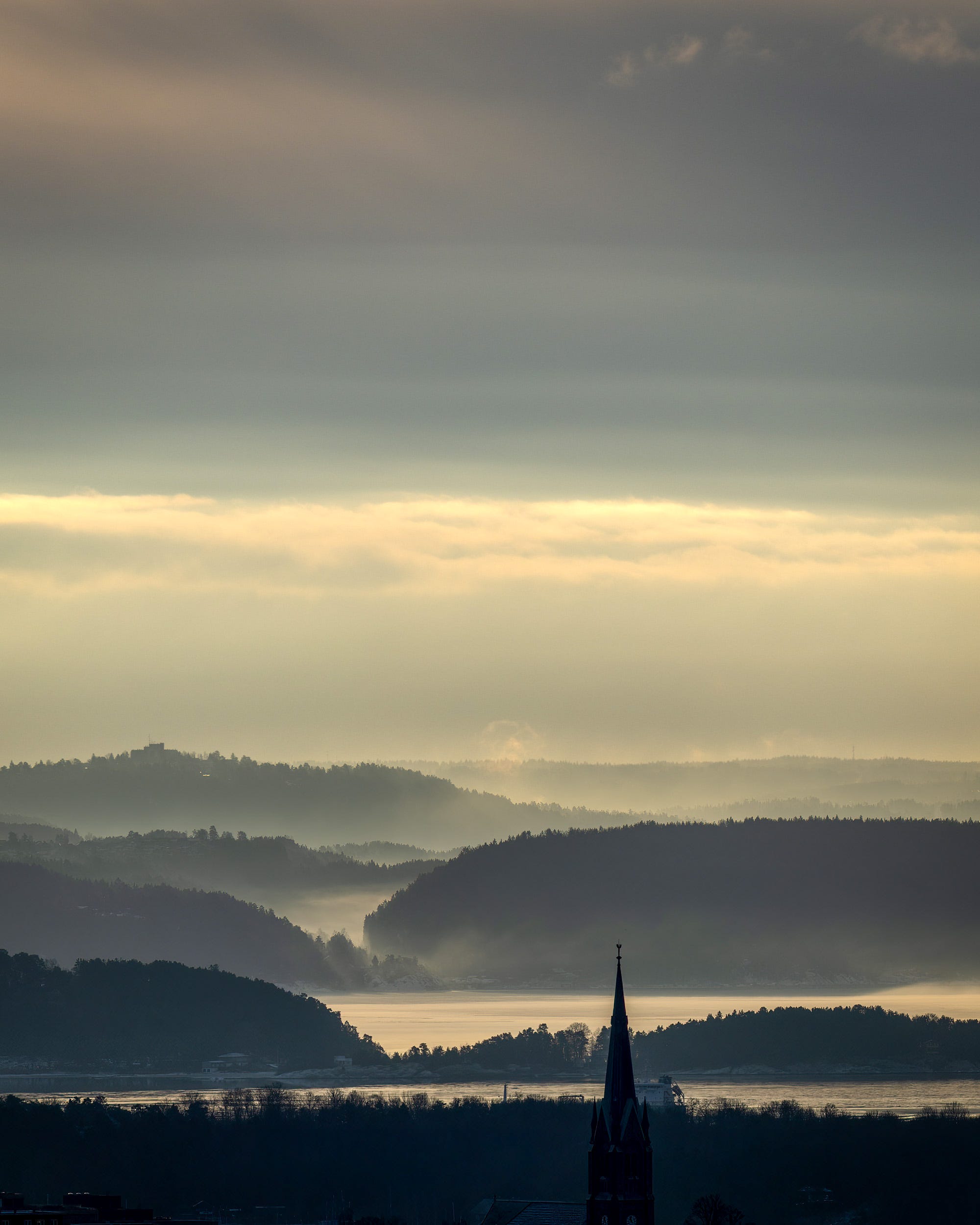
While choosing high compression eliminates much of the surrounding visual clutter, it creates a new challenge: managing the "noise" at the edges of the frame. Normally, I would rigorously exclude bright lights or high-contrast elements near the borders to avoid distraction. However, here I chose to leave these traces intact.
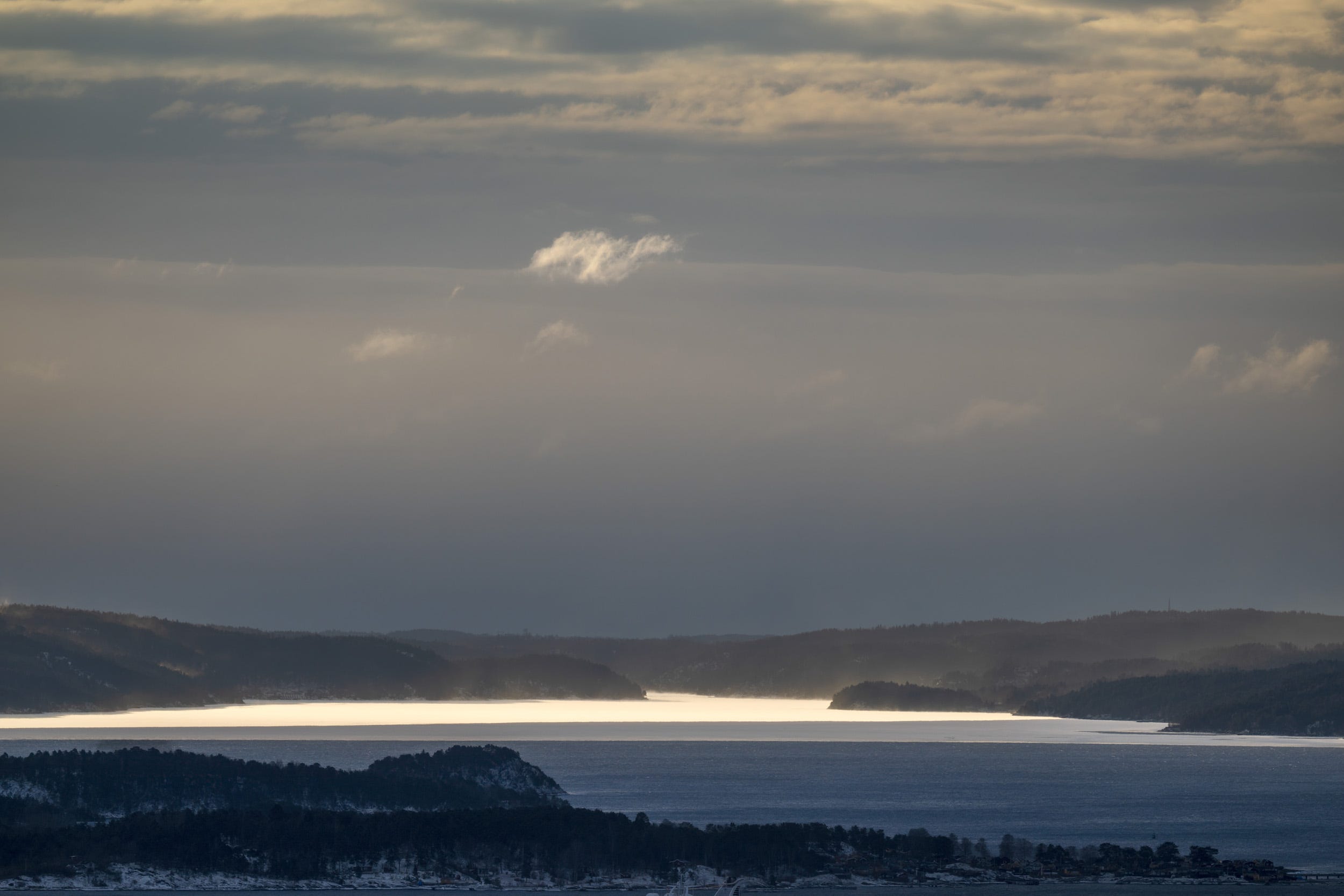
Throughout these images, you might see the Color Line ferries at the bottom of the frame, alongside cranes, hotel lights, and the cabins on Lindøya. I left these intact to communicate a vital context. Within this view, there are a million people nearby, some of whom are likely gazing out at this same scene.
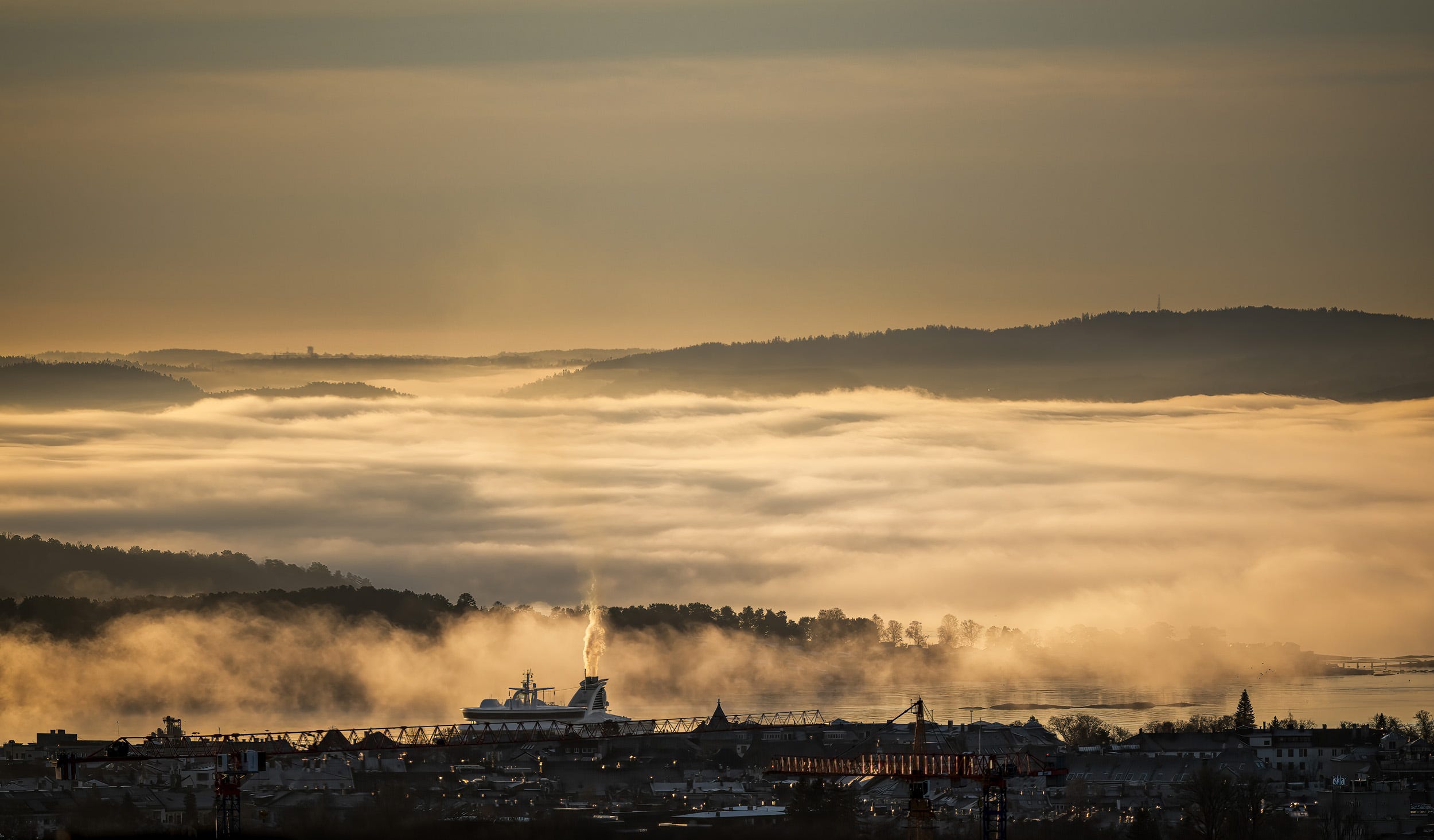
Inspired by Monet’s 'Haystacks,' this album captures moments of light and atmosphere by studying the Oslofjorden from a single vantage point over time.
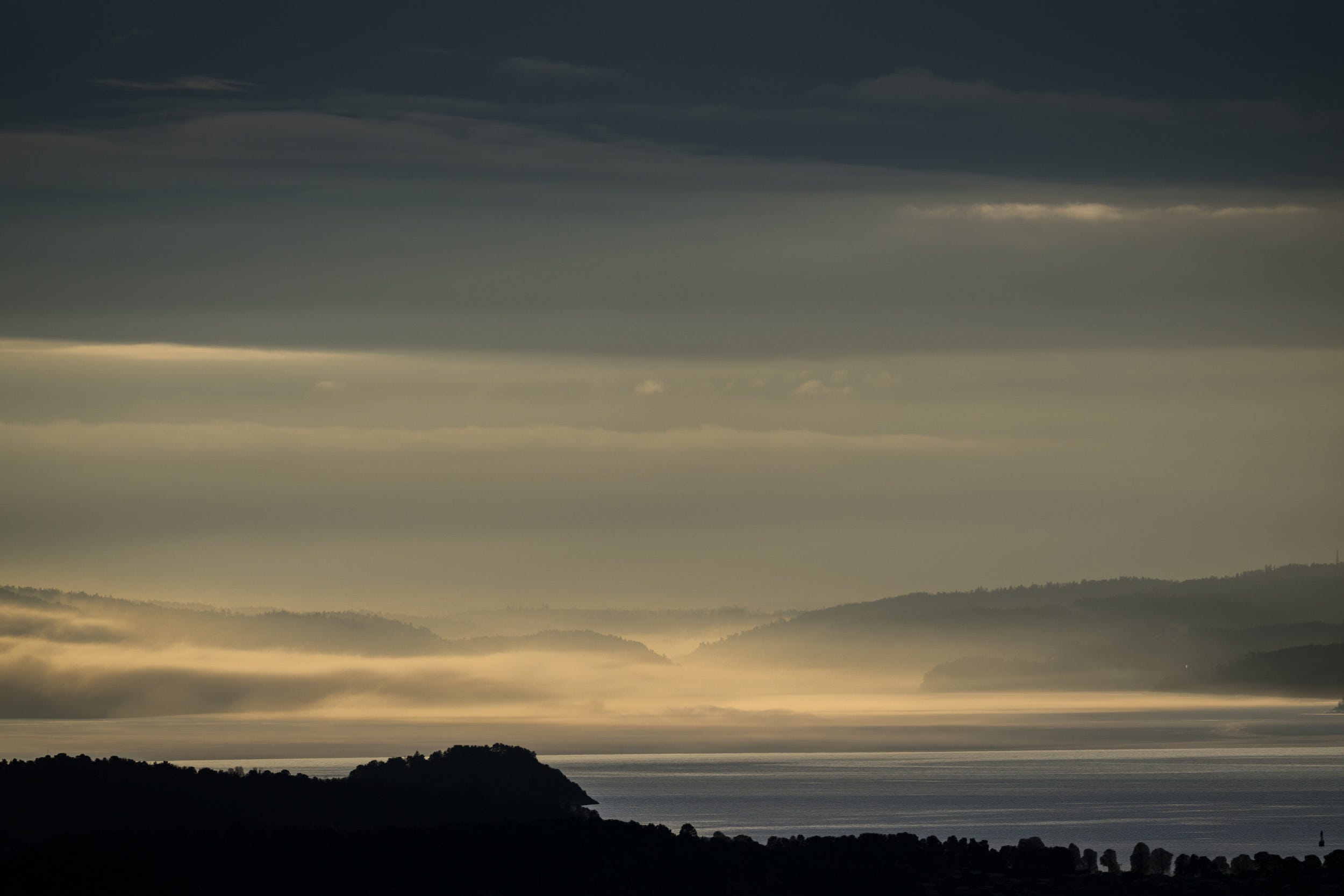
Though this collection spans several years, the archive is far from complete. I have found that the longer I watch this stage, the more its subtleties reveal themselves. The light remains inexhaustible, and the study continues—perhaps to be gathered into a second volume in the years to come.